How to Build an Ecommerce Website for a Jewellery Business (Step-by-Step Guide)
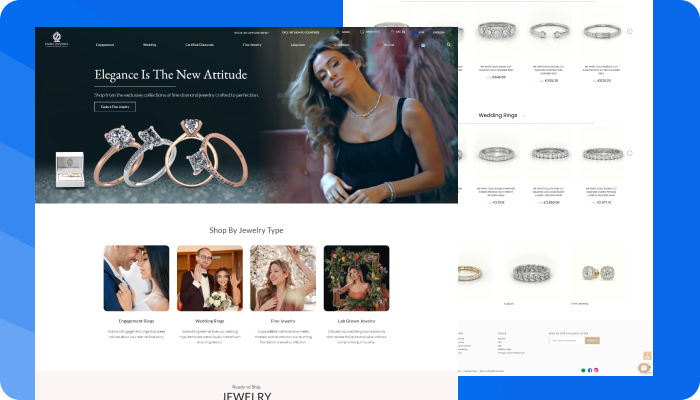
Building an ecommerce website for a jewellery business requires more than a standard online store. Jewellery ecommerce demands high trust, real-time pricing, advanced product visualization, and secure system integration.
This guide explains how to build a jewellery ecommerce website step by step, covering strategy, features, platform selection, design, pricing, security, SEO, and scalability.
What Is a Jewellery Ecommerce Website?
A jewellery ecommerce website is a digital platform that allows customers to browse, customize, and purchase jewellery online, while integrating pricing logic based on gold rates, diamond quality, and making charges.
Unlike regular ecommerce websites, jewellery platforms require:
- Dynamic pricing
- Advanced product visuals
- Inventory synchronization
- High-security compliance
Why Jewellery Businesses Need an Ecommerce Website
1. Customer Buying Behaviour Has Changed
Modern jewellery buyers:
- Research designs online before visiting stores
- Compare prices, certifications, and reviews
- Expect transparency and customization options
If a jewellery brand is not visible online, it loses customers early in the buying journey.
2. Ecommerce Expands Market Reach
A jewellery ecommerce website enables:
- Nationwide sales
- NRI and international orders
- B2B and wholesale inquiries
- 24/7 digital showroom access
3. Online Presence Builds Trust
A professional website improves:
- Brand credibility
- Customer confidence
- Lead quality for offline stores
Step 1: Define Your Jewellery Ecommerce Strategy
Before development, clearly define the business model.
Types of Jewellery Ecommerce Models
- B2C Retail: Direct online sales
- B2B / Wholesale: Dealer and bulk ordering
- Hybrid Model: Online catalog + showroom conversion
Decide What You Will Sell Online
- Ready-to-ship jewellery
- Made-to-order designs
- Custom jewellery
- Inquiry-based digital catalogs
Define the Primary Goal
- Online sales
- Store visit leads
- Brand visibility
- Dealer onboarding
Step 2: Choose the Right Ecommerce Platform for Jewellery
Not all ecommerce platforms support jewellery-specific requirements.
Generic Platforms (Limitations)
Platforms like Shopify or WooCommerce may struggle with:
- Gold rate-based pricing
- Diamond quality variations
- Custom product configurations
- POS and ERP integration
They are suitable for small catalogues but limit long-term scalability.
Custom Jewellery Ecommerce Platform (Recommended)
A custom-built solution supports:
- Real-time gold and diamond pricing
- Jewellery-specific workflows
- Advanced customization logic
- Integration with inventory and accounting systems
Step 3: Jewellery Website Design Best Practices
Jewellery ecommerce design focuses on trust, elegance, and clarity.
Key Design Principles
- Clean and premium layout
- Minimal distractions
- Luxury colour palette
- Strong focus on product visuals
Mobile-First Experience
Most jewellery browsing happens on mobile devices. The website must:
- Load quickly
- Display detailed product information
- Offer smooth navigation
Step 4: Advanced Product Visualization & 3D Technology
Standard product images are not enough for jewellery ecommerce.
Why 3D Visualization Matters
3D jewellery views allow customers to:
- Rotate products
- Examine fine details
- Understand craftsmanship clearly
Custom Jewellery Configurators
Customers can:
- Select gold purity
- Choose diamonds or gemstones
- Adjust size and design elements
This significantly improves engagement and conversion rates.
Step 5: Jewellery Pricing & Inventory Management
Jewellery pricing is complex due to:
- Daily gold rate changes
- Diamond grading differences
- Making charges and taxes
A jewellery ecommerce website must support:
- Dynamic pricing calculations
- Real-time inventory updates
- Online and offline stock synchronization
Step 6: Security, Compliance & Trust Signals
High-value jewellery transactions require strong security.
Essential Security Features
- SSL encryption
- Secure payment gateways
- PCI compliance
- Fraud prevention systems
Trust-Building Elements
- BIS hallmark information
- Diamond certifications (GIA, IGI)
- Clear return and exchange policies
- Store address and contact details
Step 7: Payment Gateway & Checkout Optimization
A smooth checkout experience improves conversions.
Best Practices
- Multiple payment options (UPI, cards, EMI)
- Transparent price breakdown
- Guest checkout option
- Fast and secure checkout flow
Step 8: POS, ERP & System Integration
An ecommerce website should integrate with business systems.
Benefits of Integration
- Unified online and offline inventory
- Accurate stock levels
- Centralized sales and accounting data
- Reduced manual errors
Step 9: SEO & Digital Marketing for Jewellery Ecommerce
Jewellery Ecommerce SEO Essentials
- Keyword-optimized category pages
- Product schema mark-up
- Fast page speed
- Informational blog content
Paid Marketing Channels
- Google Search Ads for high-intent buyers
- Instagram and Facebook for discovery
- Retargeting ads for abandoned carts
Step 10: Analytics, Optimization & Scaling
Key Metrics to Track
- Conversion rate
- Best-selling products
- Customer behavior
- Marketing ROI
Continuous Optimization
- Improve product pages
- Test pricing strategies
- Enhance mobile user experience
A scalable ecommerce foundation supports long-term growth without rebuilding the platform.

FAQs (Featured Snippet Ready)
How much does it cost to build a jewellery ecommerce website?
The cost depends on features, customization, and integrations. Basic platforms may cost less, while custom jewellery ecommerce solutions require higher investment.
Which platform is best for jewellery ecommerce?
Custom-built platforms are best for jewellery businesses due to complex pricing, inventory, and customization requirements.
Can jewellery be sold online securely?
Yes. With proper SSL encryption, secure payment gateways, compliance standards, and trust certifications, jewellery ecommerce can be highly secure.
Is 3D jewellery visualization necessary?
3D visualization improves customer confidence and engagement, making it highly recommended for online jewellery sales.
Final Thoughts
A jewellery ecommerce website is no longer optional — it is a core business asset.
When built with the right strategy, technology, and user experience, it enables jewellery brands to increase reach, build trust, and scale efficiently in a digital-first market.


Comments
Post a Comment